

- English
 Español
 Português
 русский
 Français
 日本語
日本語 Deutsch
 tiếng Việt
 Italiano
 Nederlands
 ภาษาไทย
 Polski
 한국어
한국어 Svenska
 magyar
 Malay
Malay বাংলা ভাষার
 Dansk
Dansk Suomi
Suomi हिन्दी
 Pilipino
 Türkçe
 Gaeilge
 العربية
 Indonesia
 Norsk
Norsk تمل
تمل český
český ελληνικά
 український
 Javanese
 فارسی
فارسی தமிழ்
தமிழ் తెలుగు
 नेपाली
 Burmese
 български
 ລາວ
ລາວ Latine
 Қазақша
 Euskal
 Azərbaycan
 Slovenský jazyk
 Македонски
 Lietuvos
 Eesti Keel
 Română
 Slovenski

How Do Resistor Components Affect PCB Performance?
Abstract
Resistors look simple, but Resistor Components are often the hidden reason a product runs cool and stable—or drifts, overheats, and fails in the field. Buyers and engineers usually don’t struggle with “what a resistor is”; they struggle with choosing the right resistor for real-world conditions: temperature swings, surge events, tight spaces, automated assembly, and long-term reliability. This article breaks down the practical selection rules, common failure patterns, and a clear specification checklist you can use when purchasing or integrating Resistor Components into PCBs. You’ll also find a parameter table, decision-oriented lists, and an FAQ to answer the questions that slow down sourcing and design reviews.
Table of Contents
- Outline
- Where Customers Get Stuck with Resistor Components
- What “Resistor Components” Really Includes
- A Practical Selection Checklist
- SMD vs Through-Hole: When Each Wins
- Reliability, Derating, and Failure Modes
- PCB Assembly Considerations That Prevent Rework
- Quality Control and Incoming Inspection
- Common Pitfalls and How to Avoid Them
- FAQ
- Conclusion and Next Steps
Outline
- Identify the real pain points behind resistor selection and purchasing delays
- Explain the major categories inside “Resistor Components”
- Provide a spec-first checklist and a parameter comparison table
- Show how packaging and assembly choices impact reliability
- Offer inspection and quality tips to reduce field failures
- Answer common buyer and engineer questions in a focused FAQ
Where Customers Get Stuck with Resistor Components
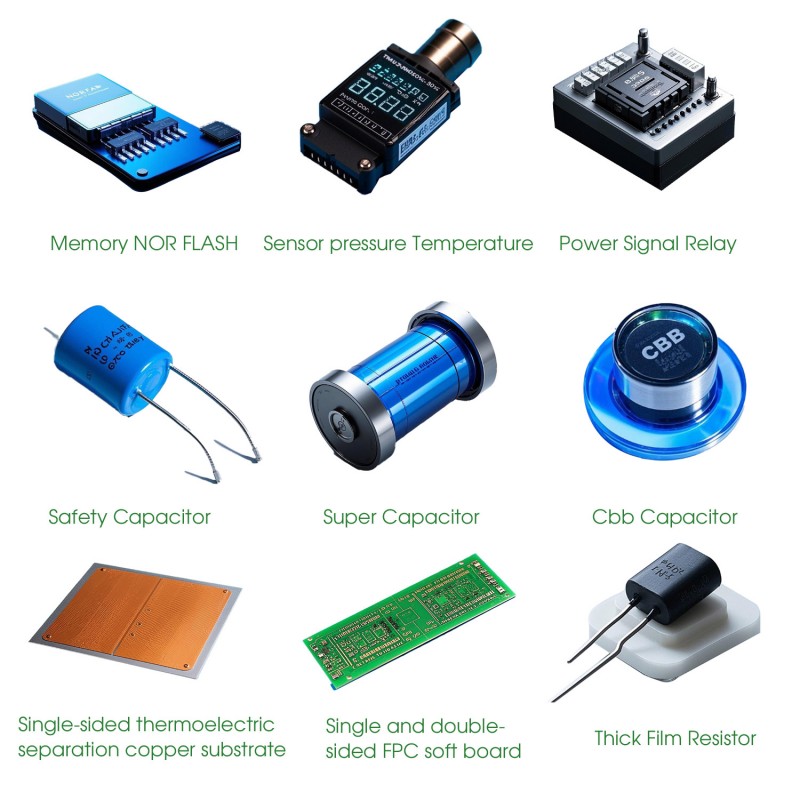
Most sourcing issues happen because the resistor description is incomplete. A line item that reads “10k 1% 0603” is often not enough to protect performance, schedule, or warranty risk. Here are the pain points we see again and again when teams purchase Resistor Components for production:
- Overheating in compact designs: power rating is chosen without considering ambient temperature, copper area, and airflow.
- Drift over time: the resistance value changes under heat, humidity, or long duty cycles—especially in precision sensing and feedback loops.
- Unexpected failures during surges: inrush current, ESD, or load dump events crack or burn resistors that look “fine on paper.”
- Assembly defects: tombstoning, poor wetting, or micro-cracks appear after reflow, depaneling, or mechanical stress.
- Second-source mismatch: “equivalent” parts differ in temperature coefficient, pulse handling, or construction, causing subtle performance changes.
The fix is simple in concept: specify Resistor Components by function and environment—not just by ohms and package.
What “Resistor Components” Really Includes
The term Resistor Components typically covers more than standard fixed chip resistors. Understanding the category helps you avoid replacing a specialized part with a generic substitute.
- Fixed resistors: thick film, thin film, metal film, carbon film, wirewound.
- Current sense resistors (shunts): low-ohm, high-power, often four-terminal (Kelvin) options for accurate measurement.
- Resistor networks/arrays: multiple matched resistors in one package for space savings and tracking.
- Power resistors: higher wattage parts designed for heat dissipation and surge tolerance.
- Fusible resistors: resistors designed to fail safely (open) under overload, used for protection.
- High-voltage resistors: optimized geometry and insulation to handle high working voltages.
- Variable resistors: trimmers/potentiometers for calibration and adjustment (less common in fully automated designs).
If your circuit relies on measurement accuracy, stable gain, or thermal predictability, the resistor “type” matters as much as the value.
A Practical Selection Checklist
Use this checklist when specifying Resistor Components for procurement, or when reviewing a BOM before mass production:
- Function: Is it biasing, pull-up/down, feedback, damping, sensing, termination, or protection?
- Resistance value and tolerance: How much variation can the circuit accept?
- Temperature coefficient (TCR): Will resistance shift with temperature break accuracy or stability?
- Power and thermal environment: Continuous power, peak power, ambient temperature, copper area, enclosure heat.
- Pulse/surge requirements: Inrush current, ESD, lightning transient, motor start, inductive kick.
- Voltage rating: Working voltage can be the limiting factor even when power looks safe.
- Package and assembly method: SMD size, reflow profile, mechanical stress, cleaning process.
- Reliability target: Consumer vs industrial vs automotive-like demands (lifetime, cycles, humidity).
- Second-source plan: Match construction and key ratings, not only value and package.
If you want a fast way to communicate requirements across teams, the table below turns the checklist into a buyer-friendly spec sheet.
| Parameter | Why It Matters | Typical Options | When to Prioritize |
|---|---|---|---|
| Technology | Impacts noise, stability, drift, and pulse handling | Thick film / Thin film / Metal film / Wirewound | Precision sensing, low noise analog, high pulse loads |
| Tolerance | Sets initial accuracy and affects calibration cost | ±5% / ±1% / ±0.5% / ±0.1% | Feedback networks, ADC scaling, sensor bridges |
| TCR | Controls how value shifts with temperature | 200ppm/°C / 100ppm/°C / 50ppm/°C / 25ppm/°C | Outdoor devices, thermal cycling, precision control loops |
| Power Rating | Overheating causes drift, cracking, and early failure | 0.1W–1W (SMD) / multi-watt (TH) | Bleeders, snubbers, LED current setting, power rails |
| Pulse/Surge | Protects against short bursts that exceed steady-state ratings | Standard / Pulse-rated / Anti-surge | Power-up events, inductive loads, transient-rich environments |
| Voltage Rating | Prevents arcing and surface breakdown | Package-dependent working voltage | High-voltage dividers, mains-related circuits, EV/industrial |
| Package Size | Affects heat spreading and mechanical robustness | 0402 / 0603 / 0805 / 1206 / larger | High density vs reliability trade-offs |
SMD vs Through-Hole: When Each Wins
Picking the “wrong” format is a classic reason for rework. Here’s a practical comparison:
- SMD resistors: best for high-volume automated assembly, compact layouts, shorter electrical paths, and consistent placement.
- Through-hole resistors: best for higher power dissipation, mechanical robustness, prototyping, and applications where rework is frequent.
A common mistake is forcing tiny SMD packages into hot zones. If a resistor runs warm, consider moving from 0603 to 0805/1206 (or using multiple resistors in parallel/series) to reduce thermal stress. When you scale package size, you usually gain thermal headroom and mechanical strength—often at a small cost increase that’s cheaper than field failures.
Reliability, Derating, and Failure Modes
Reliability problems with Resistor Components rarely announce themselves immediately. They show up as drift, intermittent behavior, or failures after shipping. Focus on these principles:
- Derate power: avoid running at the limit. A resistor at 70–80% of its rating in a hot enclosure can age fast.
- Manage heat paths: copper area, thermal vias, and spacing from heat sources matter as much as “wattage.”
- Respect pulse events: a short surge can crack film layers even if average power is low.
- Control mechanical stress: board flex during assembly, screw mounting, and depaneling can create micro-cracks.
Common failure modes you can design out:
- Thermal damage: discoloration, resistance drift, eventual open circuit.
- Cracking: often caused by board bending or uneven solder joints; may become intermittent with vibration.
- Moisture effects: value shift under humidity, especially in less-stable constructions and contaminated surfaces.
- Overvoltage breakdown: surface tracking or arcing in high-voltage applications.
PCB Assembly Considerations That Prevent Rework
Even perfect Resistor Components can fail if assembly conditions are ignored. If your pain point is “we keep fixing the same board issues,” prioritize these:
- Footprint correctness: pad geometry influences solder volume, wetting balance, and tombstoning risk.
- Reflow profile compatibility: excessive ramp rates and thermal shock can stress chip resistors.
- Placement orientation: in some designs, orienting resistors consistently can improve inspection and reduce rework time.
- Board flex control: use depaneling methods and fixtures that minimize bending near small passives.
- Cleaning and residues: flux residues can contribute to leakage paths in high-impedance or high-voltage circuits.
If you’re outsourcing assembly, share functional intent, not just the BOM. Shenzhen Greeting Electronics Co., Ltd. (and any qualified build partner you choose) can support a more reliable outcome when the assembly house knows which resistors are precision-critical, surge-critical, or thermally stressed—because those positions deserve extra scrutiny during placement, reflow, and inspection.
Quality Control and Incoming Inspection
A lightweight inspection plan can prevent expensive failures later—especially when you are switching suppliers, dealing with market shortages, or running a new production batch.
- Verify marking/packaging: confirm value, tolerance, size, lot code, and moisture handling labels for sensitive parts.
- Sample measurement: check resistance at room temperature; for critical circuits, consider checking at two temperatures to reveal drift risk.
- Visual inspection: look for chips, cracks, or damaged terminations in reels and cut tape.
- Solderability spot-check: especially if parts are old stock or have uncertain storage conditions.
- FAI (first-article inspection): on new builds, inspect hot-zone resistors for discoloration and joint quality after thermal testing.
The goal isn’t to slow production—it’s to catch mismatches early when they are cheapest to fix.
Common Pitfalls and How to Avoid Them
-
Pitfall: specifying only “value + package”
Fix: include tolerance, TCR, power (with derating intent), and pulse needs. -
Pitfall: ignoring voltage rating
Fix: verify working voltage for the chosen package, especially in divider networks and mains-adjacent designs. -
Pitfall: swapping thick film and thin film casually
Fix: align technology with your performance target; precision analog and sensing often benefit from more stable constructions. -
Pitfall: hot resistors placed next to heat sources
Fix: move them, increase copper, scale package, or split power across multiple parts. -
Pitfall: board flex cracking small passives
Fix: adjust panelization, add keep-outs, and control depaneling stress near dense passive regions.
FAQ
Which resistor technology should I choose for general electronics?
For many everyday digital and biasing tasks, standard chip resistors work well. When stability, low drift, or measurement accuracy matters, choose more stable constructions and specify tighter tolerance and TCR. For high pulse or surge situations, select pulse-rated parts rather than relying on steady-state power ratings.
Why does my resistor pass bench tests but fail in the field?
Field failures often come from temperature cycling, humidity exposure, mechanical stress, or surge events that were not fully represented during short bench tests. Pay special attention to derating, enclosure heat, and transient events. Also review assembly stress sources like depaneling and screw mounting.
Is it safe to downsize from 0805 to 0603 to save space?
It can be safe if the thermal environment and electrical stress are well controlled. But downsizing reduces heat dissipation margin and can increase susceptibility to cracking in high-stress layouts. If the resistor is in a hot zone, carries meaningful current, or sees surges, downsizing is often a false economy.
How many times should “Resistor Components” appear in a BOM description?
It’s less about repetition and more about completeness. A good line item includes resistance, tolerance, TCR, package, power, voltage (if relevant), and any surge/pulse or special construction requirements. That’s what prevents procurement confusion and supplier substitutions that change performance.
Do I need special resistors for current sensing?
Yes, current sensing often benefits from low-ohm resistors designed for power handling and measurement accuracy. Four-terminal (Kelvin) options can improve accuracy by reducing the effect of solder and trace resistance.
Conclusion and Next Steps
If you want fewer surprises in production, treat Resistor Components as performance parts, not generic placeholders. Specify the function, the environment, and the stress profile (heat, pulses, voltage, and mechanical load). Then align technology, package, and ratings to that reality. This approach reduces redesign cycles, avoids “equivalent” substitutions that aren’t truly equivalent, and improves long-term stability in the products your customers rely on.
Need help selecting the right Resistor Components for your PCB build, validating substitutions, or preparing a production-ready BOM? Contact us today to discuss your application and get practical, build-focused guidance.
Send Inquiry



X
We use cookies to offer you a better browsing experience, analyze site traffic and personalize content. By using this site, you agree to our use of cookies.
Privacy Policy