

- English
 Español
 Português
 русский
 Français
 日本語
日本語 Deutsch
 tiếng Việt
 Italiano
 Nederlands
 ภาษาไทย
 Polski
 한국어
한국어 Svenska
 magyar
 Malay
Malay বাংলা ভাষার
 Dansk
Dansk Suomi
Suomi हिन्दी
 Pilipino
 Türkçe
 Gaeilge
 العربية
 Indonesia
 Norsk
Norsk تمل
تمل český
český ελληνικά
 український
 Javanese
 فارسی
فارسی தமிழ்
தமிழ் తెలుగు
 नेपाली
 Burmese
 български
 ລາວ
ລາວ Latine
 Қазақша
 Euskal
 Azərbaycan
 Slovenský jazyk
 Македонски
 Lietuvos
 Eesti Keel
 Română
 Slovenski

How Does Home Appliance PCBA Reduce Failures in Real-World Use?
Abstract
If your home appliance product is suffering from high return rates, random field failures, noisy sensors, overheating hotspots, or “it passed in the lab but died in the customer’s kitchen” surprises, the root cause often lives on the control board. A well-designed and well-built Home Appliance PCBA isn’t just a collection of parts—it’s the reliability engine of your appliance, shaping safety, performance consistency, and warranty cost. This article breaks down the most common customer pain points (unstable batches, compliance setbacks, supply disruptions, firmware and test gaps) and gives you a practical playbook: what to specify, what to verify, what to test, and what to demand from your manufacturing partner—so your appliance survives heat, humidity, vibration, dust, user abuse, and time.
Table of Contents
- Outline
- The Pain Points That Make Appliances Fail
- What “Good” Home Appliance PCBA Looks Like
- Design Choices That Prevent Warranty Claims
- Testing Strategy That Catches Problems Before Shipping
- Component and Supply Stability Without Constant Redesign
- How to Evaluate a PCBA Partner
- Decision Table: Pain Point to Fix
- FAQ
- Next Steps
Outline
- Why home appliances fail differently from “clean” electronics
- Reliability markers you can verify before mass production
- Board-level design decisions that prevent overheating, noise, and resets
- A testing ladder: inspection → programming → functional → stress checks
- Component risk control: alternates, PCNs, and lifecycle planning
- Supplier evaluation checklist you can use in RFQs and audits
The Pain Points That Make Appliances Fail
A home appliance control board lives a rough life. It’s not sitting in a climate-controlled server room—it’s living next to motors, heaters, pumps, compressors, switching power supplies, and the unpredictable chaos of everyday users. That’s why a Home Appliance PCBA must be built for “real-world messy,” not just “bench-top perfect.”
- Random resets and lockups: brownouts, EMI noise, weak power rails, or marginal firmware timing.
- Overheating and early aging: hotspots near MOSFETs, regulators, relays, or high-current connectors.
- Sensor drift and false triggers: noisy analog paths, poor grounding, humidity contamination, or bad shielding.
- Batch inconsistency: uncontrolled substitutions, process drift, or inconsistent soldering profiles.
- Compliance delays: creepage/clearance issues, grounding mistakes, or insufficient safety isolation.
- “Works in factory, fails at customer”: test coverage gaps, weak programming verification, or missing stress checks.
These pain points usually don’t come from a single dramatic mistake. They come from small “almost okay” decisions stacking up—until your failure rate becomes a business problem.
What “Good” Home Appliance PCBA Looks Like
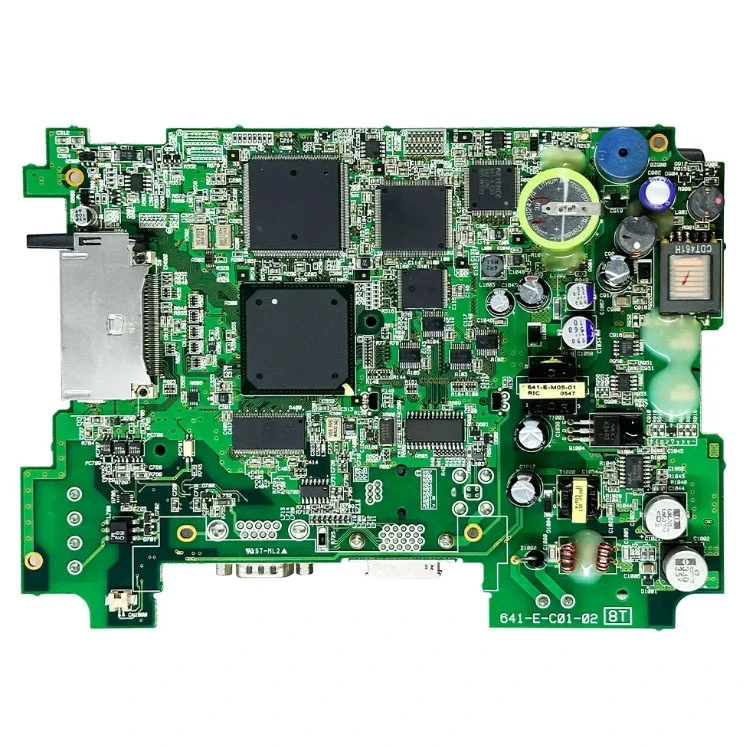
You don’t need magic to improve reliability. You need visible signals of discipline—on design, manufacturing, and test. A high-quality Home Appliance PCBA typically shows these traits:
- Stable power architecture: clean rails, sensible decoupling, and graceful handling of sags and surges.
- Noise-aware layout: clear separation of high-current switching zones from sensitive analog/sensor zones.
- Thermal reality checks: heat is directed and dissipated, not trapped under plastic housings.
- Defined substitution rules: alternates are qualified ahead of time, not “picked on the fly.”
- Testability by design: accessible test points, programming headers, and clear pass/fail criteria.
- Process control: consistent solder paste printing, reflow profiles, and inspection gates.
If your supplier can’t explain how they control these items—or hides behind vague promises—expect your field failure rate to teach you the lesson later.
Design Choices That Prevent Warranty Claims
Strong manufacturing can’t fully rescue weak design. Here are practical design-level moves that frequently reduce returns for Home Appliance PCBA projects.
1) Treat power dips like a normal event, not an edge case
- Add brownout detection and safe reset behavior.
- Use adequate bulk capacitance where load steps happen (motors, heaters, relays).
- Separate noisy power stages from logic supplies when possible.
2) Layout for EMI containment
- Keep high di/dt loops small (switching regulators, motor drivers).
- Design a clean return path (grounding) so noise doesn’t wander into sensors.
- Use sensible filtering at external connectors (ESD, common-mode where needed).
3) Respect thermal hotspots
- Derate components so they don’t run near their limits in sealed enclosures.
- Use copper pours, thermal vias, or heat-spreading strategies for power parts.
- Place heat sources away from temperature sensors and fragile plastic connectors.
4) Design for assembly and service
- Choose footprints that are tolerant of real manufacturing variation.
- Plan for programming and rework: clear markings, access points, and version control.
- Use connectors and mechanical supports that survive vibration and user handling.
Small improvements here often deliver big wins: fewer returns, fewer angry reviews, and fewer last-minute firefights when production ramps up.
Testing Strategy That Catches Problems Before Shipping
Testing isn’t “one thing.” It’s a ladder. If you only do a quick power-on check, you’re basically asking the customer to do your reliability testing for you. A smarter Home Appliance PCBA approach stacks checks from fast to deep:
- Incoming inspection: confirm critical components and PCB specs match what was approved.
- SPI/AOI gate: catch paste or placement defects early, before reflow hides them.
- Programming verification: program, then verify, then lock to the correct version and configuration.
- Functional testing: simulate real inputs/outputs—motors, heaters, sensors, communications, UI.
- Basic stress checks: temperature exposure, load cycling, and repeated power cycling.
The trick is to match the testing depth to the risk profile. A simple LED driver board won’t need the same test coverage as a board running closed-loop motor control and multiple safety interlocks. But even “simple” appliances benefit from disciplined programming and functional validation.
Component and Supply Stability Without Constant Redesign
Component disruptions can quietly destroy your schedule. One missing MCU or power IC can stall shipments, force rushed substitutions, or trigger a new compliance cycle. A resilient Home Appliance PCBA plan includes supply discipline, not just purchasing hustle.
- Approved alternates: define second-source parts up front for critical items.
- Lifecycle awareness: avoid parts with shaky availability for long-lived appliance models.
- Change control: substitutions should require engineering approval, not “whatever is in stock.”
- Version traceability: every shipped board should be traceable to BOM, firmware, and process revision.
This is where good partners stand out: they don’t just “build boards,” they protect your production from surprise disruptions.
How to Evaluate a PCBA Partner
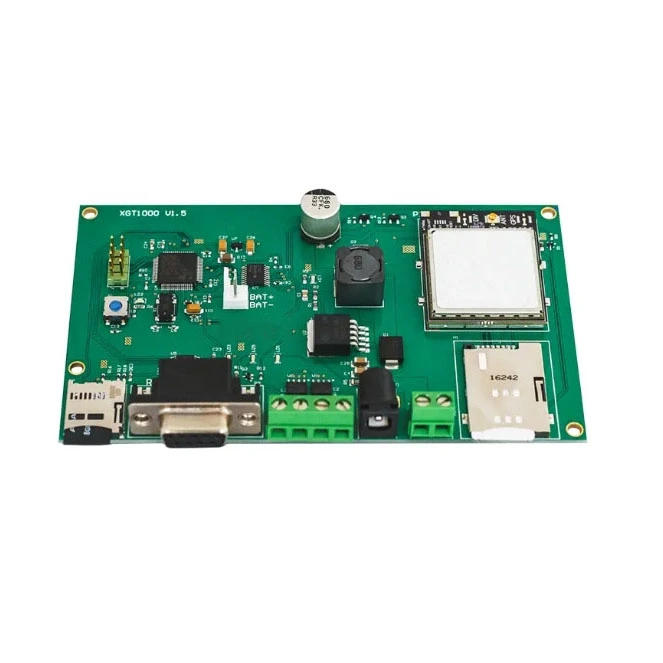
If you’re sourcing a Home Appliance PCBA supplier, don’t let glossy photos replace operational clarity. Use questions that expose real capability:
- Can they cover end-to-end needs? Beyond SMT, do they support programming, functional testing, wiring/cable work, and final assembly when needed?
- How do they control quality? Ask for the inspection gates and what defects they typically catch early.
- How do they prevent silent substitutions? Request their change approval flow.
- Do they support customization? Appliances evolve—features, UI, connectivity, sensors, power profiles.
- How do they address board duplication ethically? If you need board replication or redesign support, confirm there’s a compliance mindset and documented boundaries.
One example of a manufacturer active in this space is Shenzhen Greeting Electronics Co., Ltd., which positions itself around home-appliance-focused board services and broader contract manufacturing support for appliance control boards. When you speak to any supplier (including Shenzhen Greeting Electronics Co., Ltd.), ask for a concrete test plan, a substitution policy, and a reliability proposal—not just a quote.
Also, check whether they have experience across multiple appliance categories. Boards for vacuum cleaners, humidifiers, floor scrubbers, ice makers, and smart bathroom systems each have different noise and power realities—experience here reduces trial-and-error on your dime.
Decision Table: Pain Point to Fix
| Customer Pain Point | What to Require | What “Good” Looks Like |
|---|---|---|
| Random resets / unstable operation | Power integrity review + reset strategy + power cycling test | Board recovers safely from dips; no “mystery lockups” |
| Overheating / early failures | Thermal check under load + derating plan | Hotspots controlled; stable temps in enclosure conditions |
| Noisy sensors / false triggers | Grounding approach + filtering + EMI-aware layout review | Stable readings; fewer nuisance alarms and misbehavior |
| Inconsistent batches | Change control + traceability + inspection gates | Same BOM intent, same process window, measurable consistency |
| Supply disruptions | Approved alternates + lifecycle planning + substitution approval | Fewer redesign surprises; smoother production continuity |
FAQ
Q: What is Home Appliance PCBA, and why does it matter more than the enclosure or motor?
A: The board coordinates power, sensing, control logic, user interface, and safety behaviors. If the Home Appliance PCBA is unstable, everything else becomes unpredictable—leading to resets, overheating, noise, and warranty claims.
Q: Which tests are “must-have” for appliance boards?
A: At minimum: inspection (placement/solder), programming verification, functional testing that exercises real I/O, and repeated power cycling. Add stress checks when the product has high power or safety-critical behavior.
Q: How can I reduce failures without increasing cost too much?
A: Start with high-leverage improvements: power stability, EMI-aware layout, thermal derating, and test coverage. These often cost less than a single recall, rework campaign, or warranty wave.
Q: What should I send a supplier to quote accurately?
A: Gerber files, BOM (with approved alternates if possible), assembly drawings, programming requirements, functional test description, expected volumes, and any environmental conditions (heat, humidity, vibration) the appliance faces.
Q: I need board replication for legacy appliances—how do I handle it responsibly?
A: Work with a partner that has clear documentation practices and respects legal boundaries, while focusing on redesigning for reliability and availability rather than blindly copying.
Q: What’s the fastest way to spot a weak supplier?
A: If they can’t describe their quality gates, substitution policy, and functional test approach in concrete terms, you’re likely buying uncertainty.
Next Steps
If you’re planning a new product launch—or trying to stop recurring field failures—treat your Home Appliance PCBA as the core of your customer experience. Define the reliability targets, lock down substitution rules, demand real functional testing, and choose a partner that can support programming and end-to-end manufacturing needs when your project scales.
Looking for a practical discussion around your board files, target functions, and production goals? Shenzhen Greeting Electronics Co., Ltd. supports home-appliance-oriented board projects and can align manufacturing and testing to your product’s real operating conditions—so you ship with confidence instead of hoping for the best. Ready to move from uncertainty to a measurable plan? Contact us to share your requirements and get a clear manufacturing and testing proposal.
Send Inquiry



X
We use cookies to offer you a better browsing experience, analyze site traffic and personalize content. By using this site, you agree to our use of cookies.
Privacy Policy