

- English
 Español
 Português
 русский
 Français
 日本語
日本語 Deutsch
 tiếng Việt
 Italiano
 Nederlands
 ภาษาไทย
 Polski
 한국어
한국어 Svenska
 magyar
 Malay
Malay বাংলা ভাষার
 Dansk
Dansk Suomi
Suomi हिन्दी
 Pilipino
 Türkçe
 Gaeilge
 العربية
 Indonesia
 Norsk
Norsk تمل
تمل český
český ελληνικά
 український
 Javanese
 فارسی
فارسی தமிழ்
தமிழ் తెలుగు
 नेपाली
 Burmese
 български
 ລາວ
ລາວ Latine
 Қазақша
 Euskal
 Azərbaycan
 Slovenský jazyk
 Македонски
 Lietuvos
 Eesti Keel
 Română
 Slovenski

Why Security System PCBA Is the Make-or-Break Core of a Reliable Security Product?
Article Summary
A security device is only as trustworthy as the circuit board inside it. If you’re building (or sourcing) cameras, access control panels, smoke/CO detectors, intrusion alarms, or smart gateways, the Security System PCBA is where reliability, uptime, and “no false alarms” performance are decided. This article breaks down the most common customer pain points—field failures, unstable power, noisy signals, inconsistent assembly quality, and difficult compliance—and shows what a robust PCBA strategy looks like from design to testing to mass production. You’ll also see a practical checklist, a requirements table by application type, and answers to the questions buyers ask before placing an order.
Table of Contents
- Outline
- What Usually Goes Wrong in Security Hardware
- What a Security System PCBA Actually Does
- Design Choices That Reduce False Alarms and Field Failures
- Manufacturing and Quality Controls That Matter
- Testing That Security Products Can’t Skip
- Requirements by Security Application
- Buyer Checklist for Quoting and Supplier Evaluation
- FAQ
- Final Thoughts and Next Step
Outline
- Common failures and cost traps in security devices
- Core functions inside a Security System PCBA
- Design tactics for stability, low noise, and long life
- Assembly quality controls that reduce returns
- Test strategy for cameras, alarms, and detectors
- Application-based requirements table
- Practical buyer checklist and FAQs
What Usually Goes Wrong in Security Hardware
In the security industry, the “problem” is rarely one dramatic failure. Most customer complaints come from small, repeated issues that quietly destroy trust—random reboots, unstable connectivity, false triggers, missed triggers, foggy video at night due to power noise, or devices that work in the lab but fail after months in the field.
- False alarms: Noisy analog front-ends, poor grounding, or unstable sensor biasing can make detectors trigger when nothing happens.
- Missed events: Weak signal conditioning, slow MCU response under load, or firmware brownouts can cause real threats to be ignored.
- Random resets and “ghost” bugs: Marginal power design, insufficient decoupling, or ESD events can reboot the system without leaving a clear trace.
- Short field life: Heat, humidity, vibration, and component stress can degrade solder joints or accelerate capacitor aging.
- Inconsistent batches: If BOM control and process discipline are weak, two “identical” production lots can behave differently.
- Compliance delays: EMC/EMI problems often show up late and are expensive to fix if the layout and grounding weren’t planned early.
The best way to prevent these issues is to treat the Security System PCBA as a system-level reliability project—not just a board that “connects parts together.”
What a Security System PCBA Actually Does
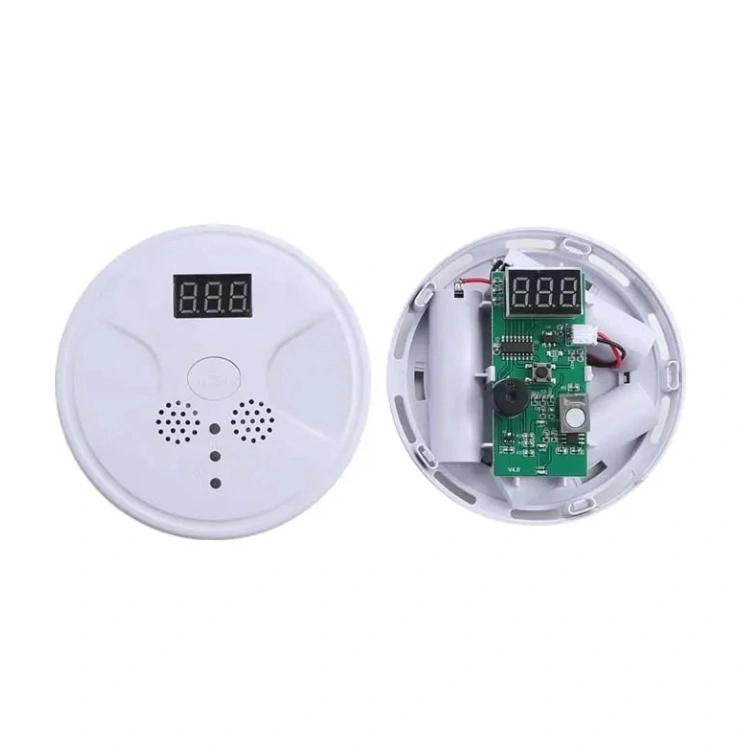
Security devices look simple from the outside, but the board inside is doing several high-stakes jobs at once:
- Power conversion and protection: Accepting wide input ranges, surviving surges, and delivering clean rails to sensitive circuits.
- Sensor acquisition: Reading PIR, smoke/CO, magnetic contacts, tamper switches, microphones, or camera sensors with stable thresholds.
- Processing and decision logic: MCUs/MPUs run detection logic, edge AI, encryption, event buffering, and watchdog monitoring.
- Connectivity: Ethernet, Wi-Fi, cellular, RS-485, CAN, or LoRa modules need clean RF/layout practices to avoid dropouts.
- Security hardening: Secure boot, encrypted storage, hardware IDs, or secure elements to reduce cloning and unauthorized access.
- Human and system interfaces: Keypads, relays, sirens, LEDs, speakers, and external I/O must be robust against misuse and noise.
This is why the board design and assembly quality often decide whether a “feature-rich device” becomes a stable product or an after-sales nightmare.
Design Choices That Reduce False Alarms and Field Failures
A strong Security System PCBA starts with disciplined electrical design and layout. Below are the design themes that consistently reduce failures and returns.
- Noise control and grounding strategy: Separate noisy power sections from analog sensing. Use a clear return path plan, keep high di/dt loops tight, and avoid routing sensitive traces through switching areas.
- Power integrity that matches real-world inputs: Security installations rarely have perfect power. Plan for voltage drops, long cables, adapter variability, and surges. Add margin in regulators and thermal design.
- ESD and surge protection at every external touchpoint: Keypads, ports, antenna connectors, and sensor wiring are ESD magnets. Proper TVS selection and placement is cheaper than chasing random resets later.
- Watchdog and brownout strategy: A good device fails “predictably.” Brownout detection, reset supervision, and a defined boot recovery mode reduce “it just died” complaints.
- Component derating for long life: Use voltage, ripple, and temperature margin. Small savings on capacitors and inductors can become massive warranty costs.
- Design for test from day one: Add test pads, programming headers, and measurable points so production can validate every unit quickly and consistently.
If you’re upgrading an existing product or replacing a legacy board, disciplined redesign (or well-controlled board cloning) can preserve original behavior while improving manufacturability and long-term sourcing stability.
Manufacturing and Quality Controls That Matter
Even a perfect schematic can fail if assembly and process control are sloppy. For security products, the goal is consistent signal integrity and mechanical reliability across every unit.
- Traceable BOM control: Component alternates should be pre-approved, documented, and validated—especially for sensors, regulators, and RF parts.
- Process controls for SMT: Stencil design, paste inspection, placement accuracy, and reflow profiling prevent intermittent solder defects.
- Moisture and handling discipline: MSL components and sensitive sensors must be stored and baked correctly to avoid latent failures.
- Optical and X-ray inspection: Fine-pitch and BGA devices often require deeper inspection than “looks fine to the eye.”
- Conformal coating options: For outdoor or harsh environments, coating can dramatically improve reliability against humidity and contamination.
Suppliers like Shenzhen Greeting Electronics Co., Ltd. are typically evaluated not only on pricing, but on how well they can execute controlled procurement, consistent assembly, and repeatable testing for security-focused builds.
Testing That Security Products Can’t Skip
Security hardware is judged by what happens on the worst day—not on a calm demo. A reliable Security System PCBA production plan usually layers multiple tests:
- In-circuit testing (ICT): Verifies solder joints, component presence, and critical nets fast.
- Functional testing: Confirms sensor readings, communications, relay outputs, audio, and event logic under realistic conditions.
- Programming and calibration: Secure keys, device IDs, RF calibration, or sensor offset calibration should be automated and logged.
- Burn-in or stress screening: For higher-risk products, short-duration stress can catch early-life failures before shipment.
- Environmental verification: Temperature cycling and basic humidity checks are especially valuable for outdoor cameras and detectors.
A practical tip: require test records (even simple pass/fail logs tied to serial numbers). It turns “we tested it” into a measurable quality system.
Requirements by Security Application
| Application Type | Typical Board Priorities | Common Failure Risks | Recommended Verification |
|---|---|---|---|
| CCTV / IP Cameras | Clean power rails, RF layout, heat management, stable image pipeline | Dropouts, night-vision noise, thermal throttling, ESD resets | Functional video test, thermal check, ESD validation, network stress test |
| Smoke / CO Detectors | Low-noise analog front-end, stable sensor bias, ultra-low power | False alarms, missed detection, drift over time | Calibration routine, sensitivity verification, power consumption profiling |
| Intrusion Alarms / PIR | Signal conditioning, stable thresholds, tamper detection | False triggers, missed motion, noisy inputs | Simulated trigger tests, EMI spot checks, event logging verification |
| Access Control Panels | Relay reliability, secure storage, robust I/O, surge protection | Relay failure, port damage, firmware corruption | I/O cycling test, surge/ESD checks, secure provisioning validation |
| Gateways / Smart Hubs | Connectivity stability, secure boot, power integrity | Random reboot, pairing issues, intermittent wireless performance | Long-run stability test, RF verification, watchdog recovery test |
Buyer Checklist for Quoting and Supplier Evaluation
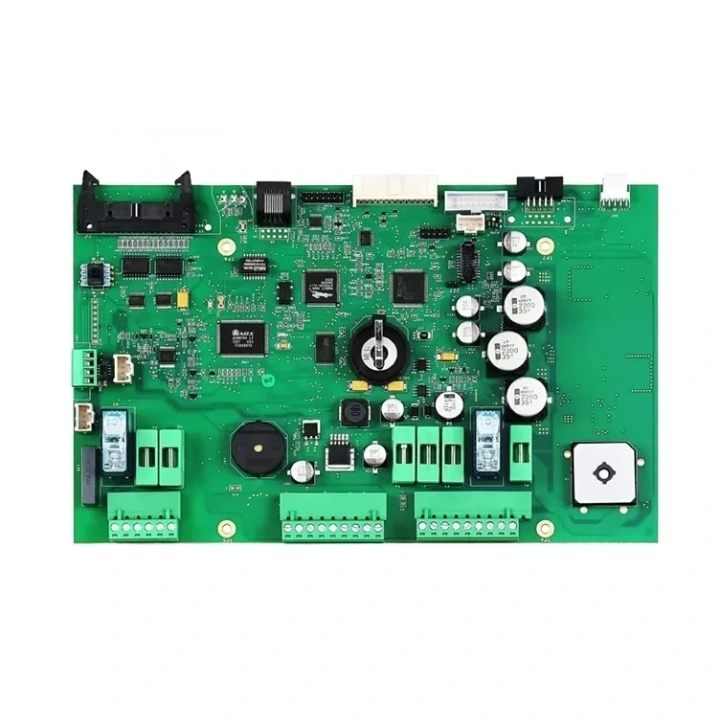
If you’re sourcing a Security System PCBA, you’ll get better results (and fewer surprises) when your RFQ includes clear technical and quality expectations. Here’s a practical checklist you can copy into your next inquiry:
- Files: Gerber, BOM, pick-and-place, assembly drawing, and any special process notes.
- Target environment: Indoor/outdoor, temperature range, humidity exposure, vibration expectations.
- Power conditions: Input range, cable length, surge exposure, backup battery behavior.
- Connectivity: Ethernet/Wi-Fi/cellular modules, antenna types, enclosure constraints.
- Quality level: Inspection steps required (AOI, X-ray), acceptable defect criteria, traceability needs.
- Test plan: ICT/FCT requirements, programming method, calibration steps, desired test logs.
- Lifecycle and sourcing: Preferred brands, acceptable alternates, end-of-life risk handling.
- Security requirements: Secure elements, key injection process, firmware protection expectations.
The more specific you are, the more a supplier can build a stable process around your product—especially when you scale beyond prototypes.
FAQ
Q: What information do I need to quote a Security System PCBA accurately?
A: At minimum, provide Gerbers, BOM, and pick-and-place. If you have functional requirements (like ultra-low power or EMC constraints), include them early so the build and test plan can match your real use case.
Q: How do I reduce false alarms caused by hardware?
A: Focus on signal integrity and power stability: stable sensor bias, proper filtering, clean grounding, and protection on external wiring. Then validate behavior with realistic trigger simulations during functional testing.
Q: Is it possible to reproduce a legacy security board that is no longer available?
A: Often yes, but success depends on documentation quality and component availability. A controlled approach includes careful BOM reconstruction, layout discipline, and behavior verification so the new build matches the original device performance.
Q: What tests are most important before shipping?
A: A combination of inspection (AOI/X-ray where needed) and functional testing that exercises sensors, communications, and outputs. For many security products, basic stress testing helps catch early-life failures.
Q: What causes “random reboot” issues in the field?
A: The most common culprits are power brownouts, ESD events, marginal regulators, poor decoupling, or firmware that doesn’t recover cleanly. A good reset supervision strategy plus targeted validation can eliminate most cases.
Final Thoughts and Next Step
If your security product’s reputation depends on consistent detection, stable connectivity, and long-term uptime, the Security System PCBA deserves the same seriousness as your software and industrial design. When the board is engineered for noise control, protection, and repeatable testing, you ship fewer “mystery failures,” reduce returns, and build customer trust that actually lasts.
If you’re planning a new build, upgrading an existing design, or preparing to scale production, contact us to discuss your application goals, testing needs, and the most reliable path from prototype to mass manufacturing.
Send Inquiry



X
We use cookies to offer you a better browsing experience, analyze site traffic and personalize content. By using this site, you agree to our use of cookies.
Privacy Policy