

- English
 Español
 Português
 русский
 Français
 日本語
日本語 Deutsch
 tiếng Việt
 Italiano
 Nederlands
 ภาษาไทย
 Polski
 한국어
한국어 Svenska
 magyar
 Malay
Malay বাংলা ভাষার
 Dansk
Dansk Suomi
Suomi हिन्दी
 Pilipino
 Türkçe
 Gaeilge
 العربية
 Indonesia
 Norsk
Norsk تمل
تمل český
český ελληνικά
 український
 Javanese
 فارسی
فارسی தமிழ்
தமிழ் తెలుగు
 नेपाली
 Burmese
 български
 ລາວ
ລາວ Latine
 Қазақша
 Euskal
 Azərbaycan
 Slovenský jazyk
 Македонски
 Lietuvos
 Eesti Keel
 Română
 Slovenski

How Can a PCB Assembly Service Protect Your Product Launch From Delays and Defects?
Abstract
If you’ve ever sourced electronics manufacturing, you already know the “silent killers” of a launch: missing parts, unclear files, last-minute design surprises, inconsistent soldering quality, and testing that doesn’t match real-world use. This article breaks down what a dependable PCB Assembly Service should look like in practice—step by step—so you can avoid rework, control risk, and ship on time. You’ll also get checklists, a comparison table of sourcing models, and a practical FAQ to help you evaluate a partner like Shenzhen Greeting Electronics Co., Ltd. with confidence.
Table of Contents
- What problems do buyers face most often?
- What should a full-scope service include?
- Which sourcing model fits your project?
- How do you verify quality without “guessing”?
- How do you keep schedules from slipping?
- How do you control cost without cutting corners?
- What files and details should you prepare?
- Why work with Shenzhen Greeting Electronics Co., Ltd.?
- What does a smooth kickoff look like?
- FAQ
Outline
- Identify the most common customer pain points in electronics assembly
- Define what “complete” assembly support looks like from review to final build
- Compare turnkey, consignment, and hybrid sourcing approaches
- Explain practical inspection and testing methods you can request and verify
- Show how strong process control protects both timeline and budget
- Provide a clear handoff checklist for Gerbers, BOMs, and assembly notes
- Offer a realistic next-step plan and FAQ for buyer decision-making
What problems do buyers face most often?
When customers search for a PCB Assembly Service, they’re usually not hunting for “a factory that can solder.” They’re trying to stop a predictable chain reaction:
- Parts chaos — alternates not approved, shortages discovered too late, or mismatched footprints.
- File ambiguity — Gerbers and BOM look “complete,” but polarity, rotation, or package details are unclear.
- Design surprises — pads, clearances, or panelization choices that create defects during reflow or wave soldering.
- Inconsistent workmanship — good samples, then unstable quality when volume starts.
- Testing gaps — basic power-on checks pass, yet field failures appear because real usage wasn’t simulated.
- Communication delays — questions sit for days, so production pauses or moves forward with assumptions.
The best PCB Assembly Service doesn’t just “build what you send.” It catches these failure modes early—before they become expensive and embarrassing.
What should a full-scope service include?
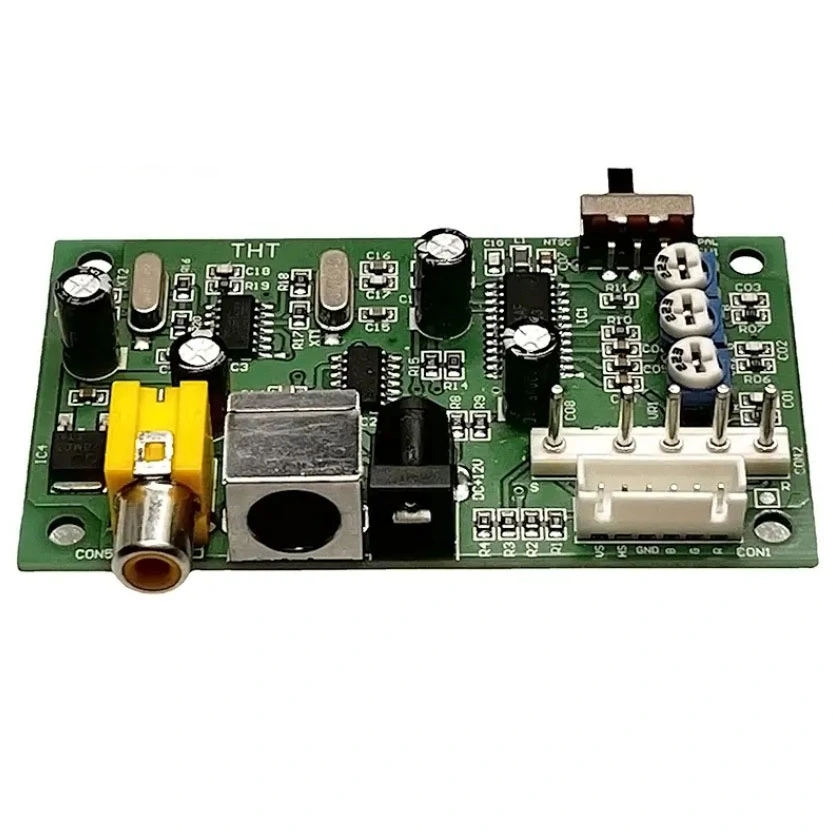
A dependable PCB Assembly Service is a connected workflow, not a single step. Here’s what “end-to-end” typically means when your goal is stable quality and predictable delivery:
- Pre-build review — confirm footprints, polarity, reference designators, and assembly constraints.
- Process planning — decide SMT vs. through-hole strategy, reflow profile approach, and assembly sequence.
- Component procurement support — sourcing, alternates management, and kitting to reduce line stoppages.
- SMT placement — accurate pick-and-place with controlled solder paste printing and reflow.
- THT assembly — selective solder or wave solder planning for through-hole parts and connectors.
- Inspection — visual checks plus automated inspection methods depending on board complexity.
- Functional testing and debugging — verifying the board behaves correctly under defined conditions.
- Product-level assembly — box build, cable/harness integration, or sub-assembly work when needed.
- Aftercare — post-delivery support for issues, revisions, and improvement feedback loops.
If a supplier only offers “we assemble PCBs,” that can still work for very simple projects. But once you have higher mix, tighter schedules, or reliability expectations, the surrounding steps become the difference between “shipped” and “shipped and stable.”
Which sourcing model fits your project?
Buyers often lose time because they choose the wrong purchasing model for the stage of their project. Use the table below as a practical guide.
| Model | Best For | Your Responsibility | Main Risk | How a Strong PCB Assembly Service Helps |
|---|---|---|---|---|
| Turnkey | Fast ramps, limited procurement bandwidth, multi-part BOMs | Provide files + approve alternates + define test expectations | Substitution surprises if approvals aren’t controlled | Structured alternates review, kitting discipline, consolidated accountability |
| Consignment | When you already have stock, strict vendor lists, or controlled parts | Buy, receive, count, label, ship parts on time | Delays from missing parts or wrong reels | Clear kitting checklist, incoming verification, line-side traceability |
| Hybrid | When you supply key ICs and outsource the rest | Provide critical parts + approve balance-of-material sourcing | Coordination complexity | Split-BOM planning, risk-based procurement, schedule protection |
If you’re prototyping, hybrid is often the least painful. If you’re scaling quickly, turnkey tends to reduce the number of “moving parts” that can derail delivery—especially under shortages.
How do you verify quality without “guessing”?
A common buyer fear is: “I can’t see the process—how do I know what I’m getting?” The answer is to request evidence that reflects real assembly control, not just attractive photos.
- Incoming checks — verify component labeling, package, and basic condition before they hit the line.
- Solder paste control — consistent printing and alignment to reduce opens and bridges.
- Automated inspection where appropriate — helpful for fine-pitch parts and dense layouts.
- First-article confirmation — review the first assembled unit before the rest of the batch proceeds.
- Traceability — record what was used, when it was used, and what revisions were applied.
- Defined acceptance criteria — a shared standard for what “pass” means on cosmetic and functional points.
Here’s a buyer-friendly way to communicate expectations: define “must-pass” tests (functional), “should-pass” inspections (cosmetic), and “review-needed” exceptions (anything that triggers a stop-and-ask rule). A mature PCB Assembly Service will prefer this clarity, because it prevents disputes after delivery.
How do you keep schedules from slipping?
Most delays aren’t caused by soldering speed. They come from waiting: waiting for parts, waiting for answers, waiting for rework, waiting for a test that wasn’t defined early enough. You can reduce these delays with a simple discipline:
- Freeze the “build-ready” package — lock revision numbers for Gerber, BOM, and placement data.
- Clean the BOM before quoting — confirm manufacturer part numbers, package sizes, and acceptable alternates.
- Plan for shortage reality — pre-approve alternates for non-critical passives and connectors where possible.
- Define testing early — even a basic functional checklist beats “we’ll test later.”
- Use clear change control — every tweak should have a revision note and an approval trail.
When a PCB Assembly Service supports you with early review and structured questions, you don’t just get a faster build— you get fewer “surprises that steal weeks.”
How do you control cost without cutting corners?
Cost control is not “cheaper assembly.” It’s fewer hidden costs: fewer scrap boards, fewer rework cycles, fewer emergency shipments, fewer returns. Practical levers include:
- Design-for-assembly decisions — avoid risky pad sizes, awkward component spacing, and fragile connector placement.
- Panelization planning — reduce handling damage and improve line efficiency.
- Smarter substitutions — approve alternates that maintain performance without inflated lead times.
- Right-sized testing — match test depth to risk (prototype vs. production vs. critical applications).
A good PCB Assembly Service will be transparent about what drives price: component sourcing complexity, density of placement, through-hole labor, special processes, and testing time. The more clearly these drivers are explained, the easier it is for you to decide what to optimize.
What files and details should you prepare?
To get accurate quotes and a smoother build, send a complete “assembly package.” If you’re missing items, you’ll still get a quote—but it will usually be slower, less accurate, or more likely to change later.
- Gerber files (or equivalent fabrication outputs) and any fabrication notes
- BOM with manufacturer part numbers, package, and approved alternates if available
- Pick-and-place / centroid file with rotations and side-of-board information
- Assembly drawing with polarity marks, special instructions, and reference notes
- Programming requirements (if firmware loading is needed)
- Test requirements (what “pass” means, what to record, what exceptions to flag)
- Target quantity and delivery date plus your revision history
If you’re early-stage and don’t have everything, you can still move forward—just expect more clarification questions. In many cases, a supportive PCB Assembly Service can work from Gerber + BOM and help you tighten the rest.
Why work with Shenzhen Greeting Electronics Co., Ltd.?
If your priority is fewer handoffs and fewer “who owns this problem?” moments, it helps to work with a partner that can connect the steps instead of treating them as separate transactions. Shenzhen Greeting Electronics Co., Ltd. provides a one-stop workflow that can cover PCB manufacturing coordination, SMT and through-hole assembly, component procurement support, product-level assembly, and additional value-added work such as cable and harness integration—so you can keep your project moving without juggling multiple suppliers.
Just as important, strong support after delivery matters when real-world feedback arrives. A responsive team with round-the-clock aftercare can help you resolve issues faster, confirm root causes, and implement improvements in the next revision—without turning every fix into a full restart.
In short: a reliable PCB Assembly Service is not only about building boards. It’s about protecting your schedule, your product reputation, and your engineering time.
What does a smooth kickoff look like?
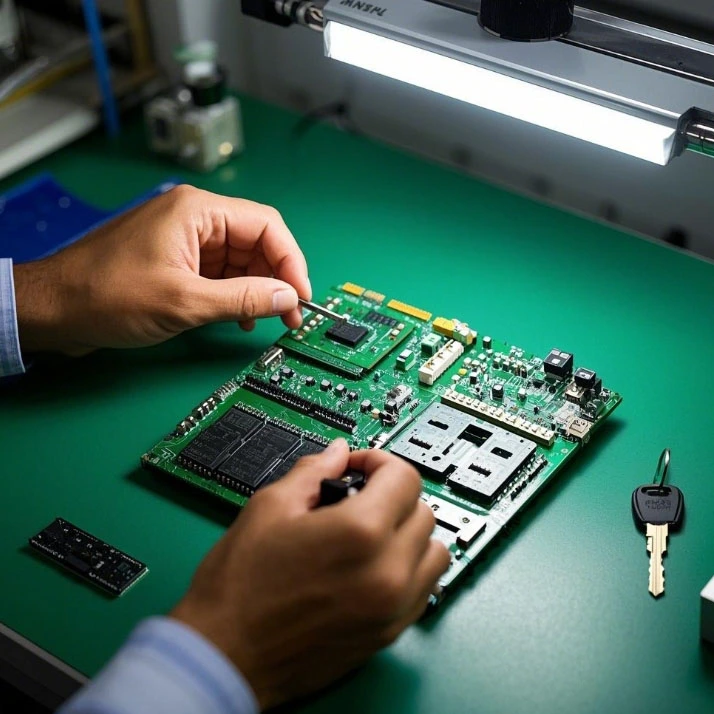
If you want the fastest path to a clean quote and a stable build, use this simple kickoff flow:
- Send your assembly package (Gerber + BOM + placement data).
- Explain your goal (prototype validation, pilot run, or production ramp).
- Confirm sourcing model (turnkey, consignment, or hybrid).
- Define testing expectations (even a basic checklist helps).
- Approve alternates and first-article rules (what requires your confirmation).
- Lock revision control so there’s no confusion mid-build.
Do this, and your PCB Assembly Service partner can focus on execution instead of chasing missing details.
FAQ
Q1: What’s the fastest way to get an accurate quote for PCB Assembly Service?
A: Provide Gerber files, a clean BOM with manufacturer part numbers, and a pick-and-place file. If you also include your
target quantity and desired delivery date, the quote will be faster and less likely to change.
Q2: Is turnkey always better than consignment?
A: Not always. Turnkey reduces coordination and can be faster when you’re short on procurement resources. Consignment can
be cost-effective when you already have controlled inventory or strict vendor requirements. Hybrid often fits prototypes best.
Q3: How many times should the keyword PCB Assembly Service appear in a technical blog?
A: Use it naturally where it supports clarity. Overuse can make the writing feel forced. Focus on solving real buyer questions
and the phrasing will take care of itself.
Q4: What testing should I ask for if I don’t have a full test fixture?
A: Start with a written functional checklist: power rails, key interfaces, basic communication checks, and any safety-critical
behaviors. You can add fixture-based testing later as you scale.
Q5: What causes most early failures in assembled boards?
A: Common drivers include incorrect polarity/rotation, solder bridging or opens, part substitutions without approval, and
connectors or mechanical parts that weren’t evaluated for assembly stress.
Q6: How can I reduce rework on dense SMT designs?
A: Request a pre-build review, clarify polarity marks, confirm fine-pitch handling steps, and use first-article approval so
issues are caught before the full batch is built.
Q7: What should I do if my BOM contains parts with long lead times?
A: Identify critical parts early and approve alternates for non-critical items. A proactive PCB Assembly Service partner can
propose options that preserve performance while protecting your schedule.
Q8: Can Shenzhen Greeting Electronics Co., Ltd. support full product assembly beyond PCBs?
A: Yes—projects may include component procurement support, complete product assembly, and value-added work like cable and
harness integration, depending on your build requirements.
Ready to reduce risk on your next build?
If you want a PCB Assembly Service that prioritizes clarity, stable quality, and predictable delivery, share your Gerber files, BOM, and target quantity with Shenzhen Greeting Electronics Co., Ltd. and let the team recommend a sourcing and testing plan that fits your timeline. When you’re ready to move forward, contact us to start your quote and get practical feedback before the first board is built.
Send Inquiry



X
We use cookies to offer you a better browsing experience, analyze site traffic and personalize content. By using this site, you agree to our use of cookies.
Privacy Policy